
The development of ovarian follicles is a fundamental part of the menstrual cycle and also one of the parameters monitored most closely during assisted reproductive treatments.
Inside each follicle is a developing egg. For this reason, monitoring their growth provides insight into how the cycle is progressing and helps identify the optimal time for ovulation.
What is an ovarian follicle?
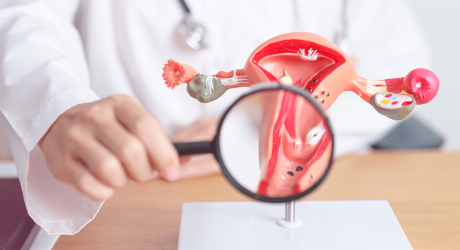
Follicles are small, fluid-filled structures found in the ovaries. Each one contains an immature egg.
At the start of each menstrual cycle, several follicles begin to grow, although typically only one becomes the dominant follicle and reaches the maturity necessary to release the egg during ovulation.
What is the ideal size for follicles to ovulate?
Although there may be some variation among women and even between cycles in the same woman, spontaneous ovulation usually occurs when the dominant follicle reaches a size of approximately 18 to 24 millimeters. However, in insemination and IVF treatments, it is not necessary for follicles to reach these sizes, as there is a possibility of spontaneous, uncontrolled ovulation. Thus, in general, treatment can be scheduled once follicles reach around 17 mm.
Reaching this size usually indicates that the egg has completed a large part of its maturation process and is ready to be released.
However, follicular size is just one of the factors involved in fertility. Egg quality, the woman's age, the condition of the fallopian tubes, and semen quality also play an important role in the chances of pregnancy.
Why is follicle size monitored in assisted reproduction?
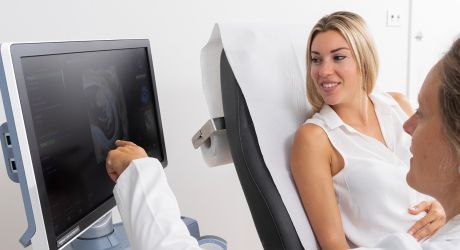
During treatments such as artificial insemination or in vitro fertilization (IVF), ultrasound monitoring allows for evaluation of the ovaries' response to hormonal stimulation.
The goal is to identify the optimal time to induce ovulation or schedule ovarian aspiration.
However, this assessment does not depend solely on follicle diameter. The specialist also takes into account other factors, such as the number of growing follicles, hormone levels, and each patient's individual characteristics.
Does a larger follicle mean a better chance of pregnancy?
Although reaching an appropriate size is an important requirement for the egg to complete its maturation, a larger follicle does not always translate to a higher probability of pregnancy.
Fertility is a complex process involving multiple factors that must be evaluated collectively. For this reason, ultrasound monitoring is always interpreted in conjunction with the rest of the available clinical information.
In assisted reproduction, the goal is not merely to ensure that follicles reach a certain size, but to optimize all the necessary conditions to promote the retrieval of mature eggs and increase the chances of achieving a viable pregnancy.