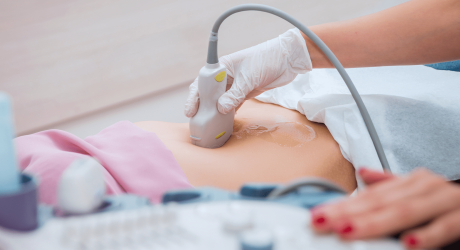
Choosing a fertility clinic in Barcelona means making an important decision in a city with a long-standing track record in reproductive medicine.
That is why, beyond searching for "fertility clinic in Barcelona" and comparing treatments, it is important to assess other criteria: the medical approach, personalisation, the experience of the team, the quality of the laboratory, transparency and support throughout the entire process.
Key criteria for choosing a fertility clinic in Barcelona
1. Is the treatment truly adapted to your case, and is there a clinical rationale for personalising it?
In assisted reproduction, there are no universal solutions. Each patient has a different medical history, diagnosis, background and personal circumstances. For this reason, treatment must be adapted to each individual case.
A good clinic should not offer a standard solution, but rather focus on personalised reproductive medicine: studying each case individually, explaining the available options, justifying why one alternative may be more suitable than another, and adjusting the treatment if the course of the process requires it.
This personalisation is only possible when there is a medical team with consolidated experience, specialised training and the ability to make decisions at every stage of the process. In assisted reproduction, every decision matters: which tests to request, which technique to recommend, how to adjust ovarian stimulation, when to change strategy or how to interpret the evolution of a treatment.
2. Does the clinic have a well-coordinated multidisciplinary team?
Assisted reproduction does not depend on a single professional. A treatment involves gynaecologists, embryologists, andrologists, nursing staff, the laboratory, patient care and, in many cases, emotional support or international teams.
For this reason, a good clinic should operate as a coordinated multidisciplinary team. The patient should not feel that each stage of treatment is disconnected from the previous one, but rather that the entire team is working with a shared understanding of the case.
3. Does the IVF laboratory work with advanced technology, advanced techniques and quality standards?
When choosing a fertility clinic, patients often focus mainly on the medical consultation, the treatments available or the visible technology. However, the IVF laboratory is an essential part of the process.
Decisive stages of treatment take place in the laboratory: gamete preparation, fertilisation, embryo culture, vitrification and embryo selection. Therefore, it is not only important to have advanced technology, but also to work with rigorous protocols, strict control of relevant parameters and an embryology and andrology team with proven experience.
When assessing a clinic, it is worth considering whether the laboratory has resources and procedures designed to optimise each stage of the process, such as embryo culture systems, vitrification techniques, advanced semen analysis, sperm selection procedures, embryo biopsy procedures for genetic analysis or technologies that support embryo assessment through artificial intelligence, always indicated according to the needs of each case.
It is also important to consider whether the clinic works with accredited quality and safety standards. Certifications such as ISO 9001 and UNE 179007 endorse the existence of management, traceability, control and continuous improvement systems in the healthcare and assisted reproduction setting.
4. Does the clinic provide clear information, transparency and honest communication?
Transparency should be present from the very beginning: necessary tests, timelines, costs, probabilities, medication, possible cancellations, risks and alternative scenarios.
In a fertility clinic, it is important to help patients make informed decisions, not to move forward with doubts or incomplete information. This also means communicating success rates clearly and realistically, explaining what the data mean, which patient profile they apply to and which factors may influence each case.
A good decision-making criterion is to be wary of messages that are too absolute or promises that oversimplify a process that is complex by nature.
5. Is there real support during the process, including care, availability and international patient services?
Fertility treatment is not just a medical procedure. It also involves waiting, uncertainty, expectations and important decisions. That is why human care, empathy and the availability of the team are aspects worth assessing from the first visit.
It is not just about "feeling well cared for", but about feeling heard, informed and supported. In this regard, it is also important to assess whether the clinic offers agile communication channels, telephone and online support, and availability to answer questions during the different stages of treatment.
In Barcelona, many people begin treatment from other countries. In these cases, experience in remote coordination, care in different languages, visit planning and logistical support help patients experience the process with greater confidence and less uncertainty.
In short
Choosing a fertility clinic in Barcelona involves assessing much more than the treatments available.
In practice, personalisation, the experience of the team, coordination between professionals, technology and support are aspects that make the difference.
An informed decision allows patients to start treatment with greater confidence, greater clarity and a more realistic view of the path ahead.