
Artificial intelligence (AI) is opening up new possibilities in assisted reproduction. Its best-known application is analysis and embryo selection, but research is also being carried out into its usefulness in personalising ovarian stimulation, predicting response to treatment or analysing oocytes and sperm.
These tools enable the processing of large amounts of information and the identification of patterns based on the available data. Their aim is not to replace the specialist or the embryologist, but to provide additional information that can aid decision-making.
How is artificial intelligence used to select embryos?
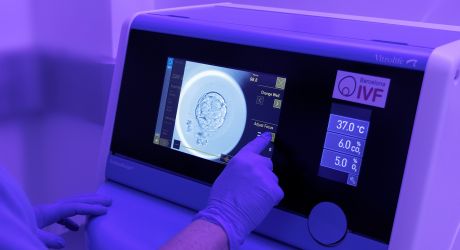
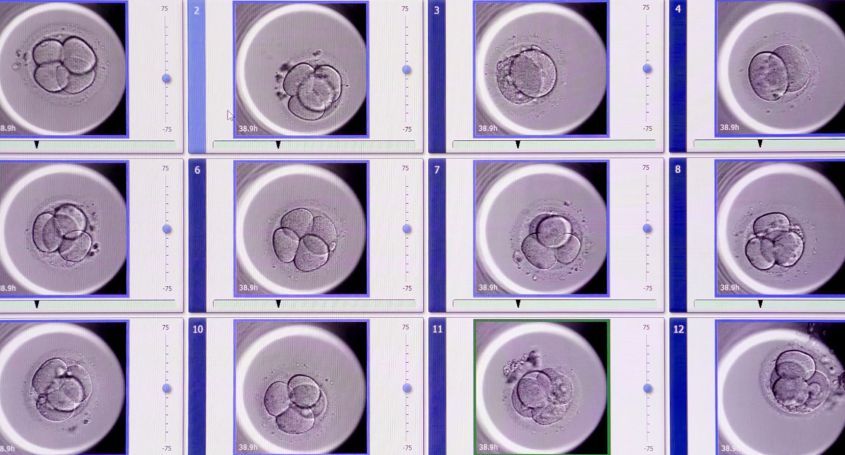
Time-lapse systems, such as EmbryoScope, allow continuous observation of embryonic development without the need to remove the embryos from the incubator. Based on these images, tools such as iDAScore use artificial intelligence to analyse their development and assign a score that helps to prioritise the available embryos.
AI can help make the assessment more objective and reproducible. However, its results must always be interpreted in conjunction with the rest of the available information and in accordance with the embryology team’s judgement.
Towards more personalised ovarian stimulation
Ovarian stimulation is another area in which the application of AI is being studied. Using various clinical data and information from previous cycles, these models can help predict the response to treatment or adjust factors such as the medication dose and the timing of the final maturation of the oocytes.
The aim is to move towards protocols that are increasingly personalised and tailored to the response of each patient.
Other applications of AI in assisted reproduction
AI is also being researched to predict the number of mature oocytes, analyse the characteristics of eggs and sperm, or estimate certain treatment outcomes.
However, many of these applications are still at the research stage and their predictions do not yet allow the outcome of a treatment to be predicted with certainty.
AI as a support tool for professionals
The ability to analyse large amounts of data makes AI a tool with great potential for assisted reproduction. At the same time, its integration poses challenges relating to data quality, algorithm validation, privacy, transparency and the potential for bias.
For this reason, these tools must always complement the expertise of professionals, and must never be a substitute for medical or embryological assessment.
At Barcelona IVF, we closely monitor scientific and technological advances that can help improve assisted reproduction treatments. Innovation enables us to incorporate new tools to gain more information and move towards increasingly personalised treatments, whilst always keeping professional judgement and the needs of each patient at the forefront.
Frequently Asked Questions
Can artificial intelligence select the best embryo?
Artificial intelligence algorithms can analyse images of embryonic development and help prioritise the available embryos according to specific parameters. This information complements the assessment carried out by the embryology team, but it cannot guarantee which embryo will result in a pregnancy.
Will artificial intelligence replace embryologists?
No. AI can automate certain analyses and provide additional information, but the interpretation of results and clinical decisions continue to require the expertise of professionals.
Are all artificial intelligence applications already in use in assisted reproduction clinics?
No. Some tools have already been incorporated into certain areas of assisted reproduction, whilst others remain at the research stage or are undergoing validation. Before introducing them into clinical practice, it is necessary to assess their accuracy, safety and usefulness across different patient populations.