Assisted reproduction has undergone significant technological development in recent years, allowing us to access more information than ever during fertility treatment.
However, technology only adds value when it is properly integrated into clinical practice and helps improve decision-making.
At Barcelona IVF, we are committed to incorporating tools with a solid scientific basis that help optimise treatment. Always with a clear objective: to place innovation at the service of more precise and personalised reproductive medicine.
Technology only makes sense when it responds to a clinical need
In reproductive medicine, as in other specialties, there are no universal solutions. Each patient has different medical and reproductive circumstances, so the treatment strategy must be adapted to each individual case.
Factors such as the patient's age, ovarian reserve, reproductive history, embryo quality or male factor directly influence clinical decisions and the selection of the most useful tools during treatment.
For this reason, having access to multiple diagnostic and laboratory tools only makes sense when there is a clear clinical rationale for deciding when and how to use them and how to integrate them into the process.
EmbryoScope: continuous monitoring of embryo development
An important part of the work carried out in the IVF laboratory involves obtaining as much information as possible about embryo development without altering the embryos' natural culture conditions.
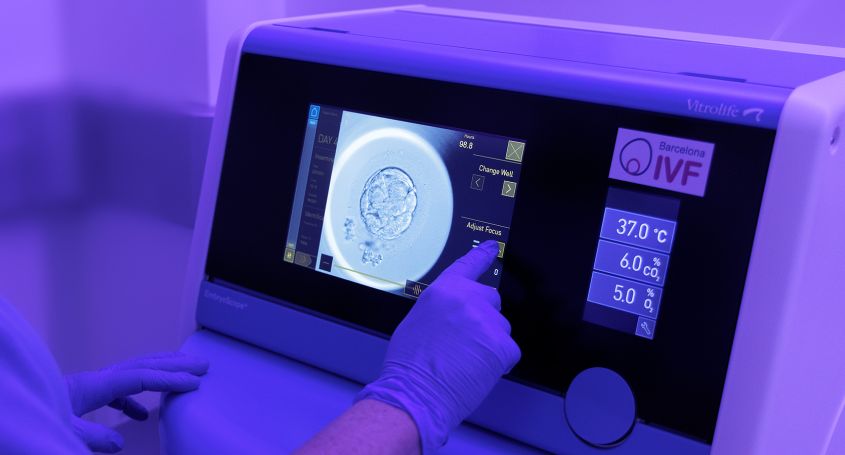
To achieve this, Barcelona IVF uses EmbryoScope, an incubation system with time-lapse technology that makes it possible to continuously monitor embryo development throughout the entire embryo culture process.
Unlike conventional systems, this monitoring is carried out without having to remove the embryos from the incubator, helping to maintain a more stable and controlled environment.
The information obtained through EmbryoScope can be complemented by artificial intelligence-based tools such as iDAScore. This system analyses the images generated during embryo culture and adds an additional assessment based on development patterns observed in thousands of embryos.
At Barcelona IVF, we use iDAScore as a support tool that provides objective information to complement the work of our embryologists.
When further analysis may be needed
In certain cases, the information obtained during embryo culture can be complemented by genetic studies that provide additional data for decision-making.
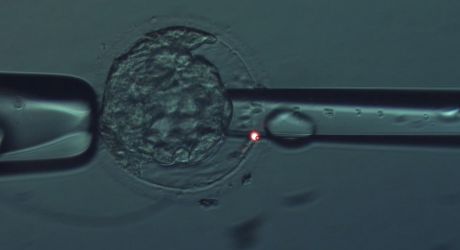
Preimplantation genetic testing (PGT) makes it possible to analyse the chromosomal make-up of embryos before transfer. Its aim is to identify genetic or chromosomal alterations that could compromise implantation or increase the risk of certain hereditary diseases.
This is not a test indicated for all patients. Its use depends on factors such as maternal age, reproductive history, recurrent miscarriage or known genetic diseases in the family.
For this reason, at Barcelona IVF the decision to carry out PGT is always based on an individualised assessment and a personalised medical indication.
Technology, experience and clinical judgement
Innovation is part of the natural evolution of reproductive medicine. However, results do not depend solely on having advanced tools, but also on knowing when to use them, how to interpret the information they provide and how to integrate them into a personalised clinical strategy.
At Barcelona IVF, we understand technology as a tool at the service of the patient. That is why we combine innovation, clinical experience and coordinated work between the medical team and the laboratory to make evidence-based decisions adapted to the needs of each case.