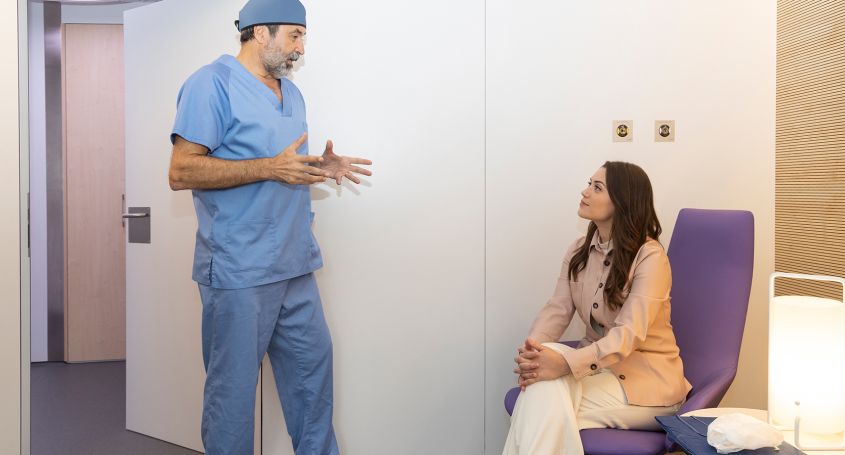
The Barcelona IVF team
Choosing a clinic is one of the first steps if you’re thinking about donating eggs in Barcelona. In Spain, donation must take place at an authorised assisted reproduction centre, where the preliminary assessment, medical monitoring and retrieval of the oocytes are carried out.
Understanding what donation involves and how the centre operates will help you decide where to undergo the process, armed with all the necessary information.
Who can benefit from an egg donation?
Egg donation helps women who are unable to achieve pregnancy using their own eggs.
This may be the case for women whose fertility has been affected by an illness, surgery or certain medical treatments, as well as for patients who, due to their age or poor ovarian response, are unable to produce eggs of sufficient quantity or quality.
What factors should you consider when choosing a clinic to donate eggs?
As well as checking that it is an authorised centre, it is advisable to assess its experience in assisted reproduction and, in particular, the care it offers its donors.
Before you begin, the team should explain clearly to you which tests will be carried out, how ovarian stimulation will work, what the egg retrieval involves and what you can expect during recovery. It is also important that you are able to raise any concerns you may have and know who to turn to if you need to ask anything during the process.
What requirements must be met to donate eggs?
To donate eggs, you must be 18 years of age or older and in good physical and psychological health.
Before you begin, a comprehensive medical assessment is carried out, which takes into account your personal and family medical history and includes a gynaecological and psychological examination, as well as various tests. Among other things, these help to rule out infections and certain genetic or hereditary conditions that could be passed on.
In addition to these requirements, each centre has its own criteria to ensure the suitability of donors. At Barcelona IVF, women aged between 18 and 35 who meet the necessary medical criteria can donate eggs.
What is the process for donating eggs?
It all begins with an initial information session. This is your chance to learn about the process, ask any questions and undergo an initial assessment to find out if you are eligible to be a donor.
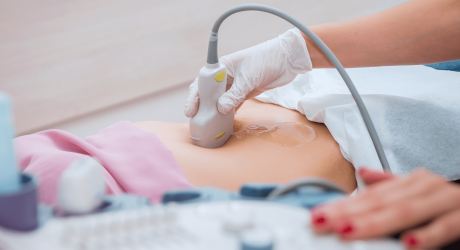
If you decide to proceed and the preliminary assessment confirms that you meet the requirements, ovarian stimulation begins. During this period, hormone medication is administered to encourage the development of several follicles, and ultrasound scans are carried out to monitor the ovaries’ response.
When the time is right, ovarian puncture is scheduled to retrieve the oocytes. This procedure is carried out via the vaginal route and under sedation.
What do you need to know about egg donation in Spain?
Egg donation in Spain is regulated by law. Before you begin, you must receive information about the procedure and its possible implications, and you must give your written consent.
Donation is voluntary, anonymous and confidential. Furthermore, donation is altruistic in nature. The financial compensation provided for by law is intended to cover any inconvenience, travel and expenses arising from the process and does not depend on the number of oocytes retrieved.
The donor cannot know the identity of the recipient, nor can the recipient know the identity of the donor.
Furthermore, donations are recorded in the National Donor Register, which enables monitoring and ensures compliance with the established requirements.
Donating eggs at Barcelona IVF
At Barcelona IVF, we understand that donating eggs is an important decision, and we want those who choose to do so to feel informed, looked after and supported.
Our donation programme combines a comprehensive medical assessment with close monitoring throughout stimulation, egg retrieval and recovery. The team is on hand to explain each step, answer any questions that may arise and adapt medical guidance to each donor’s response.
Ensuring the donor has a positive experience is also part of how we work. That is why we aim to ensure the process is undertaken with full information, confidence and the peace of mind that comes from having a specialist team supporting you every step of the way.
A Barcelona IVF donor’s experience
Hearing about how other women have experienced the process can also help you get a clearer idea of what egg donation involves.
Joana donated eggs at Barcelona IVF and particularly highlights the information she received and the support provided by the team throughout the process:
“From my very first day at the clinic, they gave me all the necessary information; they were very clear and answered every single one of my questions.”
“During ovarian stimulation, I administered the medication myself. The doctor explained very clearly how to do it and I found it very straightforward.”
“During that period, I was able to carry on with my daily activities as normal and go to work.”
“The staff at the clinic were very attentive; they kept a close eye on me throughout the process and after the egg retrieval. That’s something that gives me a great deal of confidence in them.”
You can read her full testimonial on our social media.
If you’re thinking of donating eggs in Barcelona, you can contact Barcelona IVF to find out about our programme and get answers to all your questions. During an initial assessment, we’ll explain the process to you on a personalised basis and check whether you meet the requirements to be a donor.
Frequently Asked Questions
Up to what age can you donate eggs?
The law stipulates that donors must be over 18 years of age, although each centre may set more specific age criteria. At Barcelona IVF, donors must be aged between 18 and 35, as well as meeting the necessary medical requirements for donation.
Does donating eggs affect future fertility?
Ovarian stimulation allows several oocytes—which the ovary had already recruited for that cycle but which would not naturally have matured—to mature. For this reason, egg donation does not reduce ovarian reserve or bring forward the onset of the menopause.
Does egg donation hurt?
During stimulation, you may experience some discomfort, such as a feeling of bloating or heaviness in the abdomen. The ovarian puncture is carried out under sedation, so you will not feel any pain during the procedure. Afterwards, you may experience mild discomfort, which usually subsides within a short time.
How often can you donate?
At Barcelona IVF, a period of at least three months is allowed between one puncture and the next, to ensure proper recovery.